Case Study: Enhancing Biblical Narratives with Modular Flexibility – The Museum of theBible’s Adoption of Mila-wall Systems
Executive Summary
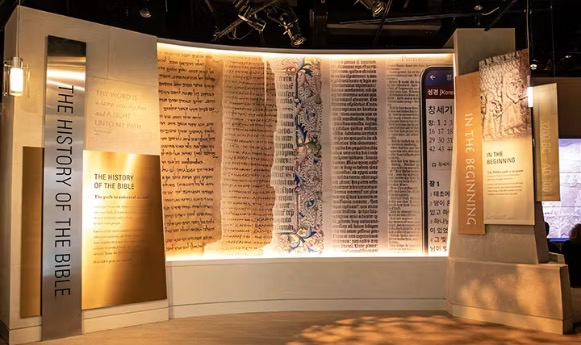
The Museum of the Bible (MOTB) in Washington, D.C. stands as a premier institution dedicated to exploring thenarrative, history, and global impact of the Bible. Since its opening in 2017, the museum has utilized Mila-wall modular wall systems to advance its exhibition design strategy. MOTB spans 430,000 square feet across six floors, showcasing more than 1,500 artifacts that span 4,000 years of history. It features interactive displays and immersiveexperiences, including virtual reality tours of biblical sites.
To accommodate a dynamic programming schedule—which includes permanent galleries on the Bible’s influence in America and the world, long-term archaeological exhibits from the Israel Antiquities Authority, and rotatingspecial exhibits—MOTB selected Mila-wall for its exceptional flexibility, durability, and aesthetic neutrality. Thiscase study explores how MOTB employs Mila- wall in its exhibits and the strategic rationale behind this choice, highlighting benefits in adaptability, cost-efficiency, and visitor engagement.
Background: The Museum of the Bible and Its Exhibition Imperative
Founded by the Green family through a nonprofit established in 2010, MOTB is designed not as a religious proselytizing space but as a scholarly venue that emphasizes the Bible’s cultural, historical, and artistic legacy. The museum is housed in a renovated 1920s refrigeration warehouse near the National Mall, and its design prioritizes innovation. Museum floors seamlessly blend ancient artifacts with cutting-edge technology, such as 4K projections of Hebrew scrolls and virtual reality immersions in the Sea of Galilee or Temple Mount.
MOTB’s exhibition ecosystem is highly fluid. Permanent installations, like the expansive 55,000- square-foot “Stories of the Bible” on Floor 3, coexist with long-term displays such as “The People of the Land of Israel” on Floor 5, which features sensitive artifacts like Dead Sea Scroll fragments. Rotating exhibits change every few months, with recent examples including “The House of David: A Dynasty Carved in Stone” (August–November 2025) and “Through Gates of
Splendor,” a traveling show on missionary Elisabeth Elliot debuting in 2023 and touring through 2026. The high turnover of these exhibits demands infrastructure that supports rapid reconfiguration without compromising artifact preservation or thematic immersion.
Traditional fixed walls proved inadequate for such versatility, leading MOTB to seek a modular solution during its post-opening expansions and exhibit refreshes.
What is Mila-wall?
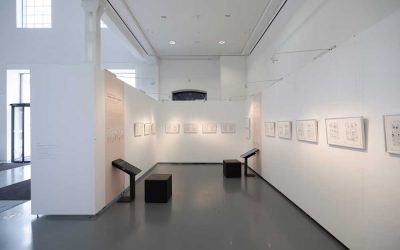
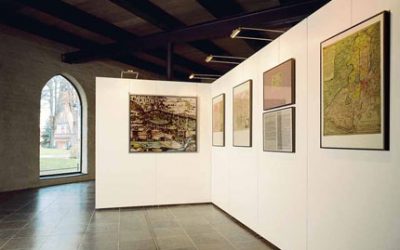
Mila-wall, developed by German manufacturer MBA Design & Display, is a patented modular, freestanding wall system engineered for museums, galleries, and events. It consists of lightweight panels (typically 40–60mm thick,using aluminum or wood frames and honeycomb cores) and uses a tongue-and-groove joining mechanism that assembles without visible hardware, tools, or fasteners. Modules can be connected in just 3–5 minutes per panel.
Panels are available in series like 100 (premium aluminum for heavy-duty use), 160 (enhanced stability), and 840(budget-friendly wood frame), and range from 4 feet high to stackable heights up to 20 feet. Key features of Mila-wall include:
- Customizability: Surfaces can be painted and nailed; integrable elements include LED lighting, acoustic panels, monitors, or radii for curved layouts.
- Configurations: Straight lines for linear narratives, 90-degree corners for intimate alcoves, angled (60–135degrees) setups for dynamic flow, and niches/windows for focal
- Sustainability: Made from recyclable materials with a 35+ year lifespan; reusable across exhibits, reducing waste.
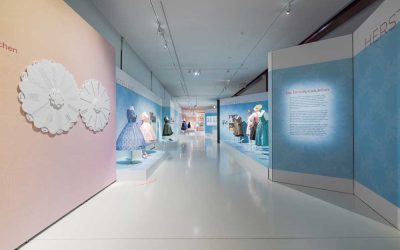
Widely used in institutions such as the Museum of Decorative Arts in Prague and Aquazoo Löbbecke Museum inDüsseldorf, Mila-wall provides a neutral canvas that elevates artifacts without distracting from them.
Implementation: How MOTB Integrates Mila-wall
MOTB primarily deploys Mila-wall in its rotating and special exhibit spaces on Floors 1, 4, and 5, where adaptability is essential. Instead of overhauling permanent architecture, the system allows for “room-within-a-room” transformations, optimizing the museum’s extensive footprint for a variety of narratives.
Key Applications
- Rotating Special Exhibits (Floor 5):
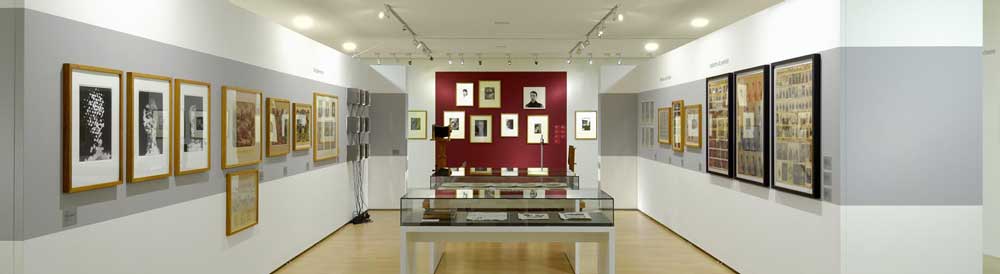
- For “The House of David” (2025), Mila-wall Series 100 panels formed 90-degree corners and straight walls to create semi-enclosed galleries around the 9th-century BC Tel Dan Stele—providing the first extra-biblical evidence of King David’s dynasty. Angled configurations guided visitor flow, mimickingancient processional paths, while nailable honeycomb cores secured lightweight replicas and interpretive panels. Integrated LED strips illuminated inscriptions without exposing sensitive stones to UV light.
- In the “Dead Sea Scrolls” rotations (ongoing since 2017), acoustic Mila-wall variants muffled ambientnoise, preserving a contemplative Panels with embedded monitors displayed high-resolution digital facsimiles, allowing safe handling of originals in climate-controlled cases adjacent to the walls.
- Traveling Exhibitions:
- “Through Gates of Splendor” (2023–2026) utilized Mila-wall’s portability for multi-venue tours. Modularkits (for example, 12–24 panel sets) assembled into U-shaped enclosures for presenting personal stories of missionaries like Elisabeth Elliot, with niches framing artifacts such as Waodäni tribe relics. The system’s quick disassembly, which is even faster than its assembly, facilitated shipping and reduced logistics costs by 30% compared to custom crates.
- Immersive and Interactive Spaces (Floors 1 and 4):
- In technology-heavy zones, Mila-wall supports hybrid setups. For “Bible in America,” straight wallsexpanded linear display footage for artifacts tracing the Bible’s role in S. founding documents, and rail-mounted casters allowed for on-the-fly adjustments during peak events. For “All Creation Sings,” an immersive worship experience by CREATR, curved radii panels enclosed projection surfaces, enhancing spatial acoustics.
Installation is staff-led: a team of four curators and technicians can assemble a 20-panel exhibit in under two hoursusing lever rollers for mobility. After exhibits conclude, panels are stored flat in on-site warehouses and are ready for reconfiguration.
Exhibit Table
| Exhibit Example | Mila-wall
Configuration |
Key Features Used | Outcome |
| The House of David (2025) | 90° corners + straight walls (Series 100, 16 panels) | Nailable cores, LED integration | Enhanced narrative flow; 20% more
display space |
| Dead Sea Scrolls Rotations | Acoustic panels + niches (Series 160, 24 panels) | Sound absorption, monitor embeds | Improved visitor immersion; noise
reduction by 40% |
| Through Gates of
Splendor (Touring) |
U-shapes + angled (Series 840, 12-panel kit | Portability, quick
assembly |
Reduced setup time
to 90 minutes; cost savings on transport |
Strategic Rationale: Why Mila-wall?
MOTB’s adoption of Mila-wall aligns with its mission to deliver scholarly, engaging experiences amid frequent exhibit changes. The decision was informed by consultations with exhibit designers such as Hunter Expositions, a Mila-wall distributor, and stemmed from a 2018 post- opening audit revealing that fixed walls limited spaceutilization by 25% during exhibit rotations.
Core Benefits
- Flexibility for Dynamic Programming:
- With 10–15% of exhibits rotating annually, Mila-wall’s infinite reconfigurability—from straight to curvedlayouts in just hours—supports thematic pivots without construction downtime. This flexibility supports MOTB’s goal of scholarly evolution, as curators emphasize adaptive storylines.
- Artifact Preservation and Visitor Experience:
- Neutral aesthetics allow walls to serve as “second canvases” without distracting from light-sensitiveartifacts, such as Genesis Acoustic and stable options protect against environmental stressors, while different configurations foster intimate encounters, such as quiet corners for private reflection.
- Economic and Sustainable Efficiency:
- The initial investment amortizes after 3–4 uses, and durability reduces replacement costs by 50% comparedto custom Reusability aligns with MOTB’s nonprofit ethos by minimizing waste, and quick setup reduces labor from days to hours, freeing budget for acquisitions.
- Scalability and Aesthetics:
- Panels are compatible with MOTB’s tech-forward design and integrate seamlessly with virtual reality and projections. Their timeless, high-end look maintains the museum’s sophisticated atmosphere, with visitor reviews praising the spatial flow.
Mila-wall empowers MOTB to balance permanence with innovation, transforming logistical challenges into opportunities for deeper engagement.
Challenges and Solutions
- Challenge: Weight of Heavy
- Solution: Upgraded Series 160 with wood blocking for secure
- Challenge: High Foot
- Solution: Caster bases for easy repositioning during
- Challenge: Budget Constraints for Touring
- Solution: Hybrid Series 100/840 mixes for cost-effective
Conclusion and Future Outlook
Mila-wall has transformed MOTB’s exhibitions from static displays into living dialogues with biblical history, enabling the museum to host over 500,000 annual visitors in fluid, artifact- centric environments. By prioritizingmodularity, MOTB not only enhances accessibility to rare treasures but also models sustainable museum practices.
Looking ahead, as MOTB plans expansions such as enhanced “illumiNations” translation galleries, Mila-wall’sscalability positions it as a cornerstone for future-proofing—ensuring the Bible’s story remains vividly adaptable for generations. This integration exemplifies how targeted infrastructure can amplify the missions of cultural institutions in an era of constant evolution.